
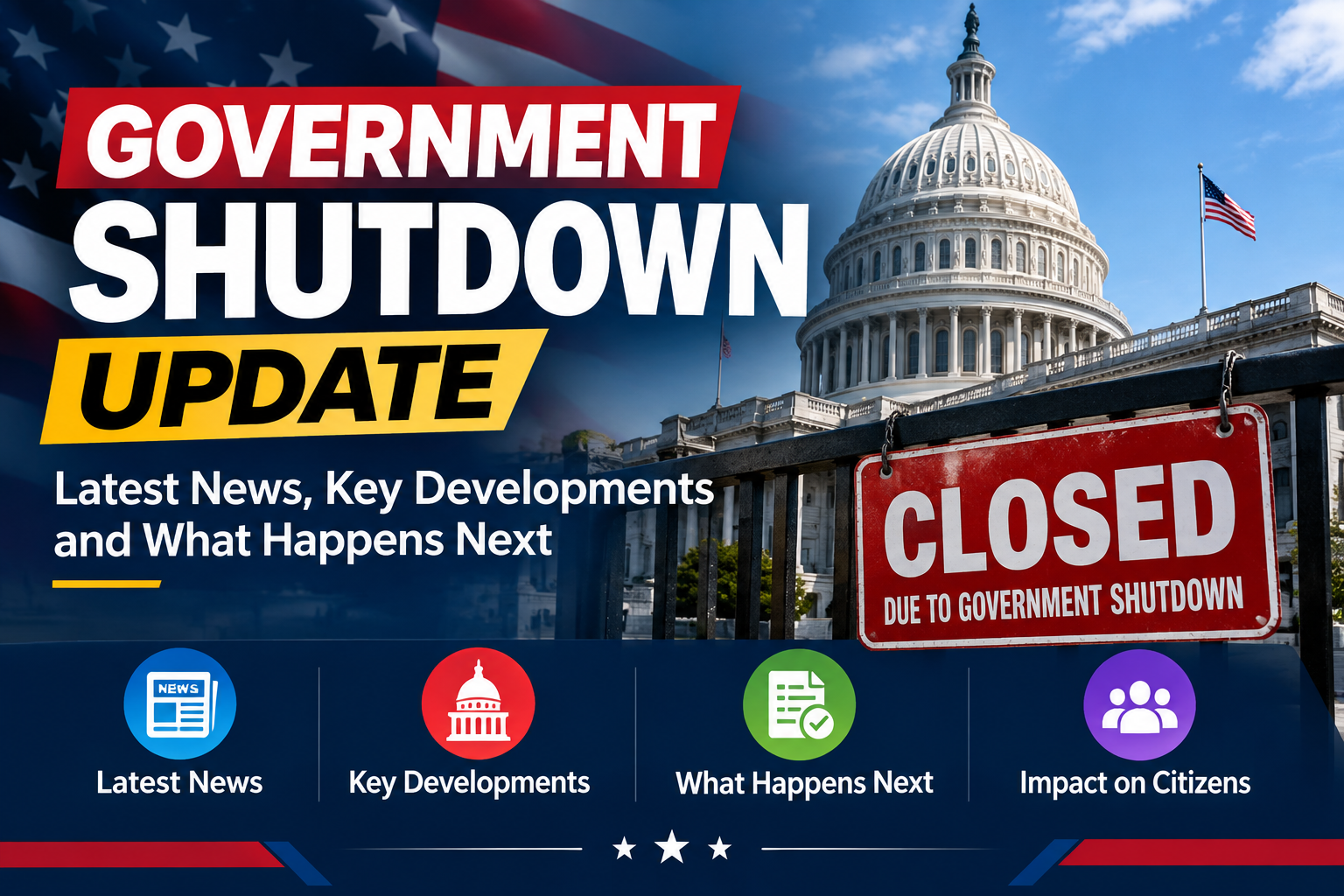
The latest government shutdown update has put renewed attention on federal funding and the decisions lawmakers must make to keep government agencies operating. A government shutdown can occur when Congress and the president do not approve funding legislation before existing funding expires. While not every government service would necessarily stop a funding lapse can affect federal employees public services contractors and agencies in different ways. Understanding the current funding situation the reasons behind the debate and what could happen next can help people separate confirmed developments from speculation.
What Is the Latest Government Shutdown Update?
The current government funding situation is centered on congressional negotiations and efforts to prevent a lapse in federal funding. Rather than assuming that every funding dispute means an immediate shutdown it is important to distinguish between ongoing negotiations temporary funding measures, and an actual lapse in appropriations.
Congress can use a continuing resolution often called a CR to temporarily fund federal agencies while lawmakers work on longer-term spending legislation. These measures can give lawmakers additional time to negotiate when full-year spending bills have not yet been completed.
The situation can change quickly because funding deadlines are closely connected to congressional votes and negotiations. If lawmakers approve the necessary legislation before funding expires agencies can continue operating. If they fail to do so affected agencies may have to follow shutdown procedures.
For readers searching for a government shutdown update the most important information is therefore whether Congress has passed funding legislation and whether it has been signed into law. Headlines about disagreements or proposed bills do not automatically mean that a shutdown has begun.
Why Could a Government Shutdown Happen?
A government shutdown can happen when federal funding legislation is not approved in time. The U.S. government cannot simply continue spending indefinitely without congressional appropriations for activities that require annual funding.
Funding negotiations can become complicated because lawmakers may disagree about spending levels agency priorities policy provisions or other conditions attached to appropriations bills. Different proposals can pass through the House and Senate but both chambers generally need to reach an agreement before legislation can move forward.
Political disagreements can also make negotiations more difficult when lawmakers have different priorities. In some situations, temporary funding legislation is used to prevent an immediate funding lapse while negotiations continue.
A shutdown is therefore usually the result of an unresolved funding dispute rather than a single event. The length and impact of a shutdown can also vary depending on which agencies are affected and how quickly lawmakers reach an agreement.
Which Government Services Could Be Affected?
A shutdown does not mean that every federal operation suddenly stops. Some government activities can continue because they are considered necessary to protect public safety national security or other essential interests.
Other activities may be reduced, delayed, or temporarily suspended if they depend on funding that has expired. Federal agencies generally have contingency plans explaining which employees and functions can continue during a funding lapse.
The effect on the public can therefore differ significantly from one agency to another. Some people may notice little immediate change, while others could experience delays with administrative processes or federal services.
Government contractors can also be affected, particularly when their work depends on federal agencies that have reduced operations. The economic impact can become more noticeable if a shutdown lasts for an extended period.
Because the exact effects depend on the specific funding situation claims that everything will close can be misleading. The more useful approach is to look at individual agencies and their published shutdown plans.
How Would a Shutdown Affect Federal Employees and the Public?
Federal employees can experience some of the most direct effects during a government shutdown. Depending on their role workers may be required to continue working while others can be temporarily furloughed.
Essential employees may continue performing their duties even when normal funding is unavailable. Other employees may be instructed not to perform regular work until funding is restored.
The public can also experience indirect effects. Certain government offices may have reduced staffing, and some applications approvals inspections or administrative processes could take longer than usual.
Businesses that depend on federal contracts or regulatory processes may also face delays. However the scale of these effects depends heavily on the duration and scope of the funding lapse.
A short funding interruption may produce limited disruption while a longer shutdown can create broader administrative and economic consequences. This is why the duration of any potential shutdown is an important part of every government shutdown update.
What Happens Next in the Government Shutdown Process?
The next step is generally continued negotiation over federal funding. Lawmakers can consider full-year appropriations bills or temporary legislation designed to keep agencies funded while negotiations continue.
If Congress passes an appropriate funding measure and it becomes law before existing funding expires a shutdown can be avoided. If funding expires without an alternative in place, affected agencies must follow federal shutdown procedures.
During negotiations proposed legislation can change several times. A measure that receives support in one chamber may still require additional negotiations before becoming law.
For that reason readers should pay attention to confirmed congressional votes official government announcements, and reliable reporting rather than relying solely on social-media posts or unverified claims.
Conclusion
The government shutdown update remains closely connected to federal funding negotiations and congressional action. A shutdown is possible when lawmakers fail to provide legal funding for affected government operations but proposed legislation and political disagreements should not automatically be described as an active shutdown. The impact would depend on which agencies are affected how long a funding lapse lasts and what temporary or permanent funding measures Congress approves. Following official announcements and confirmed legislative developments is the best way to understand what happens next.